The Best Time of Year to Pour Concrete in Bradenton, FL
If you are planning a driveway, patio, or pool deck, the question of the best time to pour concrete in Bradenton usually comes up right after budget. It is a fair question. The answer here is also different from what you will find in most national guides, because those are written for places with frozen ground and a spring thaw.
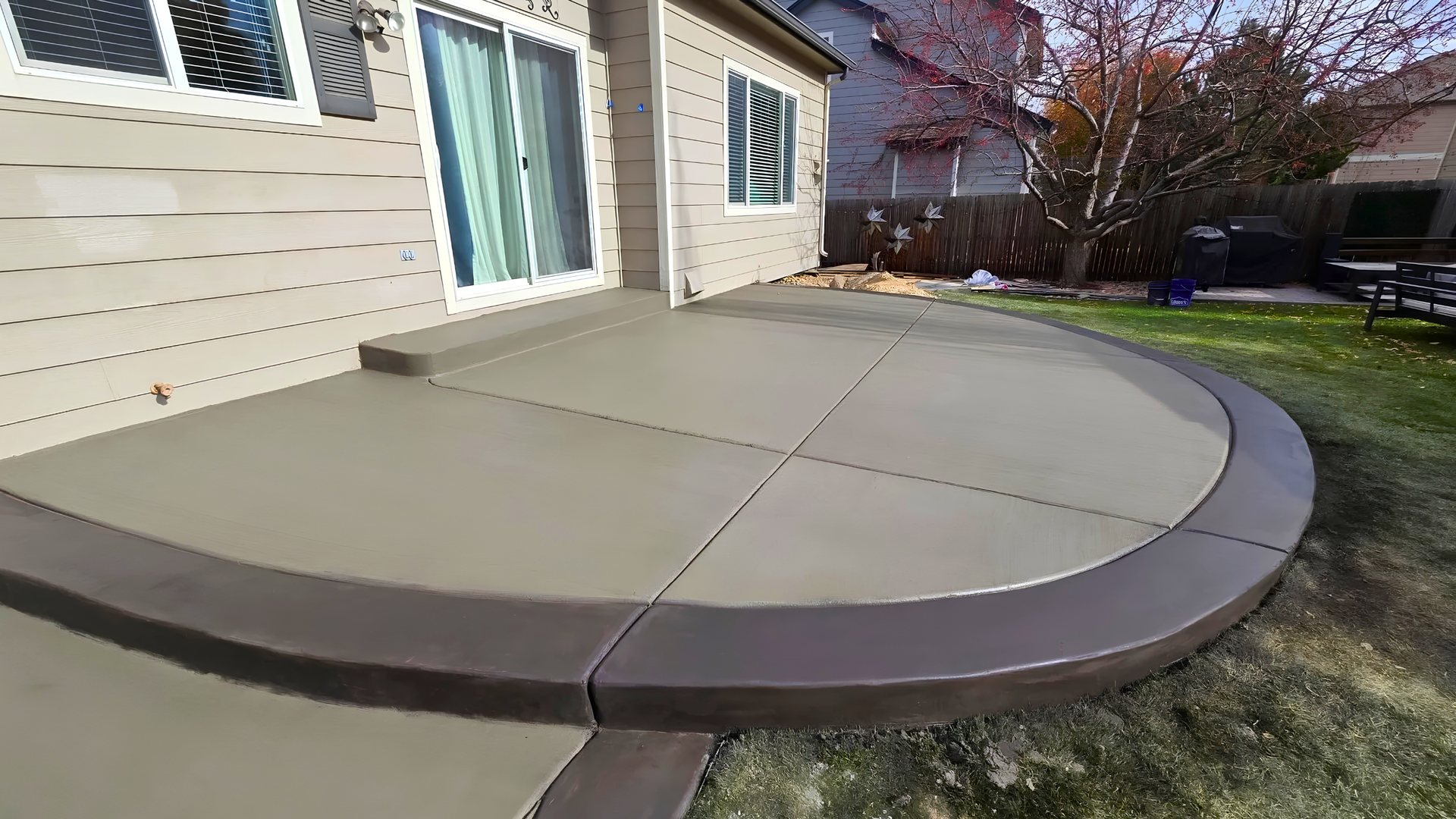
Bradenton does not really have a pouring season and an off-season. We pour year round. What changes from month to month is how much scheduling flexibility you have, how closely the crew has to watch the sky, and how much working time the crew gets once the concrete hits the ground.
Paradise Concrete has poured across Manatee and Sarasota counties for over 25 years. Here is what actually matters, and how to time your project so the finished slab turns out right no matter which month you land on.
The Short Answer for Bradenton Homeowners
The Easiest Window: October Through April
October through April is the easiest stretch of the year for concrete work in this area. Cooler air, less rainfall, fewer afternoon storms, and longer finishing windows all line up in the same months. During that stretch a crew can schedule a pour a week out and reasonably expect the day to go as planned.
Why Summer Is Still on the Table
That does not make summer a bad time to pour. It makes summer a season that rewards planning. Plenty of our best work goes down in July and August. Those pours just start earlier, move faster, and get watched more carefully.
If you want the one sentence version: any month works in Bradenton, but October through April gives you the most margin for error, and June through September gives you the least.
Why Florida Changes the Question Entirely
Most concrete timing advice online was written for climates where the real enemy is cold. Frozen subgrade, freeze-thaw damage, cold weather protection. Manatee County does not have that problem in any meaningful way. Hard freezes here are rare, and even our coolest mornings sit above the range where concrete needs cold weather measures.
Our risk profile is the opposite. In Bradenton the things that go wrong are heat, rapid surface moisture loss, and rain landing on a slab that is not ready for it.
What Hot Weather Concreting Actually Means
The American Concrete Institute does not define hot weather by the thermometer alone. Its hot weather guidance treats it as a combination of conditions: high air temperature, high concrete temperature, low relative humidity, and high wind speed. Any of those can pull moisture out of the surface faster than the concrete can replace it from below, and that is what causes plastic shrinkage cracking, the thin surface cracks that show up in the first hours after a pour.
ACI 305.1 sets a maximum concrete temperature of 95 degrees Fahrenheit at the point of discharge for general construction. That is a real number a crew can check on site, and it is one reason summer pours start early. The mix leaves the plant warm, the truck sits in the sun, and the temperature only climbs from there.
Why Bradenton Humidity Helps More Than People Expect
Here is the part that surprises homeowners. Our humidity is on our side.
The industry benchmark for plastic shrinkage risk is a surface evaporation rate of about 0.2 pounds of water per square foot per hour. That rate depends on four things working together: concrete temperature, air temperature, relative humidity, and wind speed. High humidity pushes the evaporation rate down. So does still air.
A 90 degree Bradenton morning at 70 percent humidity with almost no breeze can produce a lower evaporation rate than an 85 degree day somewhere dry and windy. In practice, wind is often a bigger problem for us than raw heat. We have poured on breezy, pleasant March mornings that needed more surface protection than a still, sticky July morning did.
That is why timing advice built around temperature alone misses the point in this climate. What matters is the whole picture on the day, not the number on the forecast app.
Bradenton Concrete Pouring Season by Season
Winter: December Through February
These are our coolest and driest months. January averages a high near 68 degrees and a low in the mid 50s, and December and February are among the lowest rainfall months of the year. For a crew, that combination is close to ideal.
Cooler air slows the set slightly, which gives finishers more working time. One thing worth being clear about: slower setting is a scheduling benefit, not a strength benefit. Concrete poured in January is not stronger than concrete poured in July. It just gives the crew a wider window to place, float, and finish properly, and proper finishing is what shows up in the final surface.
The trade off is availability. Winter is peak season here, and good contractor calendars fill early. If you want a January pour, we would rather hear from you in October.
Spring: March Through May
Spring is the quiet favorite. Temperatures climb steadily but the rainy season has not started, and May brings more daily sunshine than any other month of the year. Rainfall stays low through the whole stretch.
This is the window we push hardest for decorative work. Stamped concrete depends on hitting a narrow timing window while the slab is still workable, because pattern impression and color release both have to happen before the surface sets up. Dry, stable spring conditions give the crew the most control over that window. If you are planning a stamped patio or a stamped driveway, spring is worth targeting.
Summer: June Through September
This is Bradenton's rainy season, and the pattern is consistent enough that locals set their afternoons by it. August is typically our wettest month, with rain falling on the majority of days. Afternoon thunderstorms build almost daily, often between two and five in the afternoon.
Hurricane season overlaps this stretch, running June 1 through November 30, with peak activity from August into October. That rarely cancels projects, but it affects how far out a crew will commit to a hard date.
Summer pours are normal here. They just look different. We start early, sometimes at first light. We pour smaller sections at a time. We keep tarps and plastic on the truck every day, not only when the forecast looks bad. And we accept that some days get called off at 6 a.m. with the crew already loaded.
Fall: October and November
Fall is the sleeper pick. Rainfall drops off sharply once the rainy season breaks, usually in October. November is one of the driest months on the calendar, temperatures ease into the comfortable range, and practical hurricane risk fades well before the season officially closes.
Availability is often better in October than it will be two months later, because the winter rush has not started. If you have flexibility, ask about a fall date.
| Season | Typical Rainfall | Working Window | What It Means For You |
|---|---|---|---|
| Winter (Dec to Feb) | Lowest of the year | Longest | Easiest conditions, tightest calendars |
| Spring (Mar to May) | Low, rising slightly in May | Long | Best for stamped and decorative work |
| Summer (Jun to Sep) | Highest, near daily storms | Shortest | Very workable with early starts and flexible dates |
| Fall (Oct to Nov) | Drops sharply after October | Long | Strong conditions plus better availability |
Why Summer Pours Get a Bad Reputation
Search around and you will find plenty of advice telling Florida homeowners to avoid summer entirely. That is oversimplified. Here is what is actually behind it.
The Afternoon Storm Problem
The issue is not that it rains in summer. It is that it rains on a schedule that collides with the finishing stage of a pour. A morning pour reaches its most vulnerable point, the float and finish stage, right around the time the afternoon cells build.
The fix is straightforward but it takes discipline. Start early. On a July driveway pour we will typically have the truck on site by 6:30 a.m. and the surface broomed before 10. That means an earlier crew call, an earlier concrete order, and a homeowner who is fine with trucks arriving at sunrise.
The Shorter Finishing Window
Heat accelerates hydration, which means the concrete stiffens faster. A crew that has 90 minutes of comfortable working time in February may have closer to 45 in August. Nothing about that ruins a slab. It does mean the crew needs to be sized correctly for the pour, and it is a real reason to be cautious about a contractor who shows up shorthanded in July.
This is also where finish choice matters. A broom finish is forgiving. A smooth trowel finish or a stamped pattern is not, because both need more time on the surface.
When Summer Is Still the Right Call
Sometimes summer is the right answer. If a driveway has failed and you cannot park on it, waiting until November is not a real option. If you are coordinating around a pool build or a closing date, the concrete has to land when the schedule says it lands.
We pour through summer every year and the results hold up. The projects that go sideways in July are not the ones poured in the heat. They are the ones poured by a crew that treated a July day like a February day.
How We Time a Pour Around Bradenton Weather
Reading the Forecast the Way a Crew Reads It
A homeowner looks at a forecast and sees a percentage chance of rain. A crew looks at the same forecast and asks different questions: what time is the rain expected, how strong is the wind, what is the relative humidity, and is there a clear stretch long enough to pour and finish before anything arrives.
A 60 percent chance of rain at 4 p.m. is often a completely fine day to pour if the crew starts at 6 a.m. A 30 percent chance spread evenly across the whole day is worse, because there is no safe window inside it.
What Rain Actually Does to Fresh Concrete
The damage depends entirely on timing. Rain on concrete that has already set is a non-event. Rain on concrete that is still being finished can be a real problem, because surface water raises the water to cement ratio right at the top of the slab, which is the layer you walk on and look at for the next 25 years. The result can be a weak, dusty, or scaled surface.
| When Rain Arrives | Risk Level | What Happens |
|---|---|---|
| Before the pour starts | Low | Pour is postponed, base may need regrading or drying time |
| During placement | High | Surface water can weaken the top layer, crew covers or stops |
| During finishing | Highest | Water worked into the surface can cause dusting or scaling |
| After initial set, roughly 4 to 8 hours | Low | Generally harmless, can even assist curing |
| Days after the pour | None | No effect on a finished slab |
This is why we would rather move your date than pour into a bad window. A rescheduled pour costs a few days. A compromised surface costs a replacement.
Curing: What Happens After the Truck Leaves
Curing Is Not Drying
Curing is where a lot of homeowner confusion lives. Concrete does not dry. It cures, through a chemical reaction that keeps going for weeks as long as moisture is available. In a hot, exposed Bradenton summer, keeping that moisture in the slab is the single most important thing that happens after the pour.
When You Can Use the Slab
| Time After Pour | What You Can Do |
|---|---|
| 24 to 48 hours | Foot traffic is generally fine, keep vehicles and heavy items off entirely |
| About 7 days | Light vehicle traffic on driveways, normal patio use |
| 28 days | Full design strength reached, heavy vehicles acceptable |
| 30 days plus | Sealing window for stamped, colored, or decorative work |
Those windows shift a little with conditions. Cooler winter weather can push the early milestones slightly later, and a hot summer pour with good curing practice can hit them slightly sooner. We give every client a specific schedule based on the actual pour date rather than a generic handout, and we mark the slab so nobody drives on it early by accident.
Caring for the Slab in the First Week
One note we repeat on every job: resist the urge to hose down a new slab to cool it. Curing needs consistent moisture, not cycles of wet and dry. Uneven wetting can cause surface crazing. Follow the care plan your crew gives you.
Planning Backward: Lead Time, Permits, and Scheduling
Start From the Date You Want to Use It
The most common scheduling mistake we see is homeowners planning forward from when they call instead of backward from when they want to use the space. If you want a finished concrete patio ready for a family gathering, the pour is not the last step. Curing time, and sealing time on decorative work, both sit between the pour and the party.
A reasonable rule of thumb for a standard residential project: allow one to two weeks from signed estimate to start date during the slower months, longer during the winter rush. Add a few days of site prep and forming, one pour day, then the curing schedule above. For sealed stamped work, add another few weeks before the sealer goes down.
Permits and Who Issues Them
Permitting here depends on your exact address, not your mailing city. Properties inside the incorporated City of Bradenton go through the city's permitting office. Properties outside city limits fall under Manatee County, which has jurisdiction over unincorporated areas. Driveway work tying into a county right of way, including the apron connecting your driveway to the street, is handled separately through Manatee County Public Works.
We handle permit coordination as part of the project, but it affects your timeline. Build in a buffer rather than assuming approval is instant.
Practical Tips for Pouring Concrete Year Round in Bradenton
Before You Book
- Book winter and early spring dates two to three months ahead. These are the most requested windows and they close first.
- Ask your contractor what time the truck arrives. In summer, a start time after 9 a.m. on a large pour is a question worth asking about.
- Ask how the slab will be cured, not just how it will be poured. The answer tells you a lot about the contractor.
- Plan decorative work for the drier months when you can. Stamped concrete and colored finishes reward stable conditions more than a standard broom finish does.
Once the Date Is Set
- Stay flexible on the exact day during rainy season. A crew that will move your date is protecting your slab, not disrespecting your calendar.
- Clear access before the crew arrives, in any season. Trucks need a path, and in summer every minute of delay eats into the finishing window.
- Keep sprinklers off the new slab. Set them to skip the area for the first week rather than remembering each night.
Does the Season Change What You Pay?
What Actually Drives the Price
Not in the way most homeowners expect. Concrete pricing here is driven by square footage, slab thickness, finish type, reinforcement, and site conditions. Season is not a line item on our estimates.
Where Timing Shows Up Indirectly
Summer pours may involve smaller sections or an extra crew day if weather splits the work, and winter demand affects how far out your start date lands. If a contractor tells you concrete simply costs more in a given month, ask what changes about the work itself.
Timing affects quality far more than it affects price. A driveway poured well in August will outlast one poured carelessly in January, and the difference is crew discipline, not the calendar.
Frequently Asked Questions
What is the best month to pour concrete in Bradenton, FL?
There is no single best month, but October through April offers the most consistent conditions. Rainfall is lower, afternoon storms are less frequent, and cooler air gives the crew a longer finishing window. If you want the easiest scheduling and the fewest weather delays, target that range. Any month can produce excellent results with the right crew and the right start time.
Can you pour concrete during Florida's rainy season?
Yes, and we do it every year. Summer pours in Bradenton start early, often before 7 a.m., so placement and finishing are complete before afternoon storms build. Crews keep coverings on hand and stay ready to postpone if the forecast turns. The season does not prevent quality work. It just requires earlier starts and more schedule flexibility from everyone involved.
Does concrete cure differently in Florida heat and humidity?
It cures faster in the heat, which shortens the finishing window, but our high humidity actually works in favor of the slab by slowing surface moisture loss. The evaporation rate that drives plastic shrinkage cracking depends on humidity and wind as much as temperature. That is why a still, humid summer morning here can be gentler on fresh concrete than a dry, breezy day elsewhere.
How long before I can drive on a new concrete driveway in Bradenton?
Foot traffic is generally fine after 24 to 48 hours. Light vehicles are usually acceptable at around 7 days. Full design strength is reached at about 28 days, which is when heavier vehicles and equipment become safe. We give you a specific schedule tied to your actual pour date and current conditions, and we mark the driveway so nobody uses it too early.
What happens if it rains right after my concrete is poured?
It depends on the timing. Rain during placement or finishing is the real concern, because surface water can weaken the top layer and cause dusting or scaling. Once the concrete has reached initial set, roughly four to eight hours in, light rain is generally harmless and can even help with curing. Crews cover fresh slabs when storms arrive unexpectedly.
Is winter really the best time for stamped concrete in Bradenton?
Winter and spring are both strong choices for decorative work. Stamped concrete has to be patterned while the slab is still workable, so stable, dry, moderate conditions give the crew more control over that window. Spring is often our preference because conditions are dry and the schedule is less crowded than midwinter. Summer stamped work is possible with early starts and a well-sized crew.
Ready to Talk Timing?
Whatever month you are looking at, the pour can go well with the right planning. Tell us what you are building and when you want to use it, and we will map out a realistic schedule for your property. You will talk directly with Michael, the owner, and every project is backed by our one-year workmanship warranty.
Paradise Concrete serves homeowners across Bradenton, Sarasota, Palmetto, Parrish, Lakewood Ranch, and the surrounding communities in our areas we serve. Whether it is concrete driveway installation in Bradenton, a patio, or a fully custom outdoor build, request a free estimate and we will find your window.